Why Founders Should Write Their Own Welcome Sequence
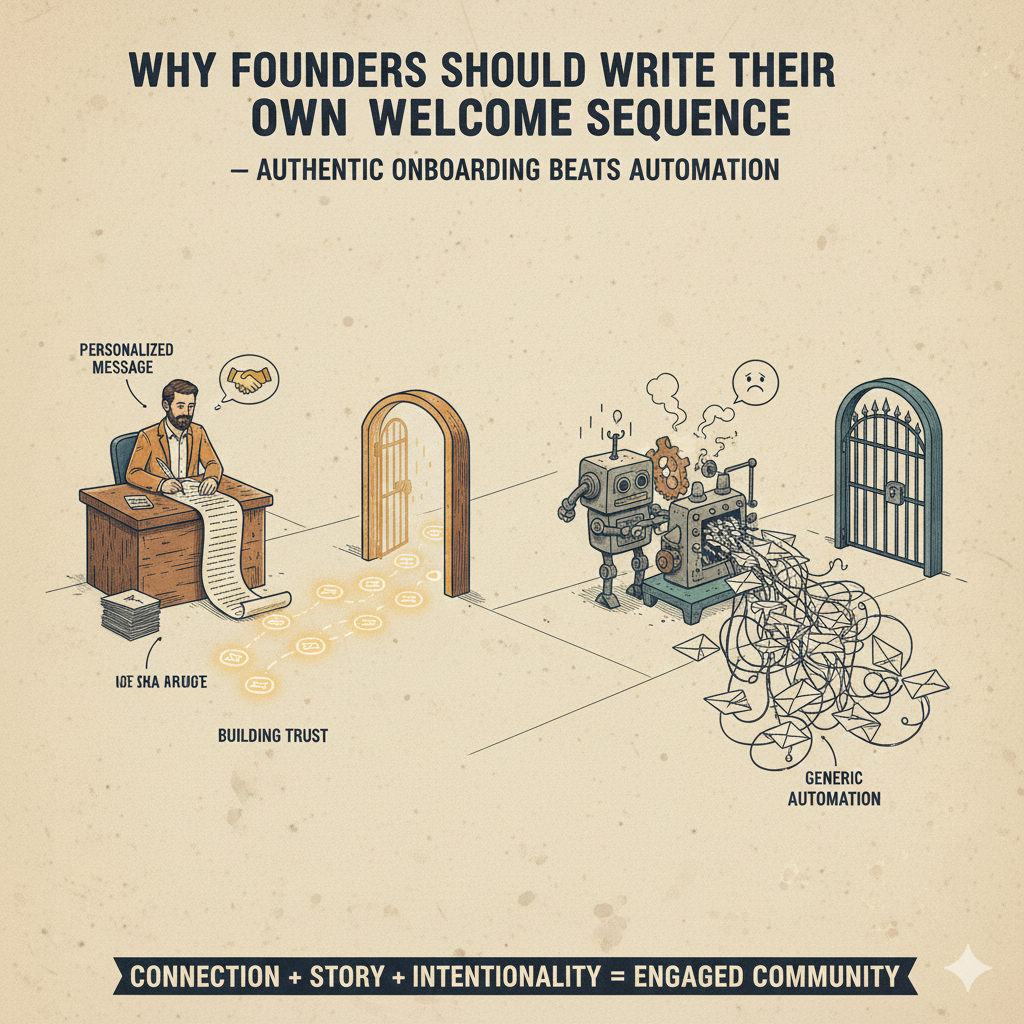
Your welcome email is the first impression.
It's the handshake. The introduction. The "Hello, we're real people, and this matters."
Yet most welcome sequences are handed off to automation. Templates. Pre-written copy. Cold, generic, lifeless.
Subscribers notice. Humans notice. They don't just open the email, they feel it.
Founders, here's the truth: nothing builds trust, connection, or loyalty faster than authenticity. Writing your own welcome sequence isn't a chore. It's an opportunity.
The Power of First Impressions
You have one chance to set the tone.
The first email sets expectations. It frames your brand. It signals whether this newsletter is going to matter or get deleted.
A founder-written welcome sequence immediately communicates: This is personal. This is intentional. This is me.
Your voice, your story, your quirks. They can't be replicated by a template. And your audience senses the difference instantly.
Build Trust Through Authenticity
Automation can tell, but it can't show.
Subscribers don't just want information,they want connection. They want the sense that someone cares enough to write directly to them.
Share your "why." Tell your story. Be human. A founder-written sequence builds trust before you even ask for a reply, a click, or a conversion. Understanding the right messaging strategies can help you craft that authentic voice.
People respond to humans. Not processes. Not marketing funnels. Humans.
Avg open rate per welcome email
Engagement drops fast. Front-load your highest-value content.
Email 1 open rates are 4× your regular rate. Use it to set expectations and deliver immediate value.
Conversion to paying customer by sequence length
More emails ≠ more revenue. Quality and pacing beat volume.
5 emails is the sweet spot. Beyond 7, fatigue sets in and conversion drops.
Set Expectations Clearly
Your welcome sequence should guide readers. But it doesn't need to be complicated.
- Explain what they can expect from your emails. Frequency. Tone. Topics.
- Share how they'll benefit. What will they learn? How will it help?
- Give one clear next step: reply, download, or explore.
When expectations are clear, readers feel oriented, not sold. They stick around longer. They engage more. They act. Learn more about structuring high-converting newsletters to maximize this impact.
Inject Personality, Not Marketing Speak
Forget polished jargon. Forget corporate fluff.
Use your voice. Be approachable. Sprinkle in humor, anecdotes, or your unique perspective. Let the human behind the brand shine.
This isn't just "friendlier copy." It's strategic. Engaged readers are 3x more likely to convert. Authentic onboarding sets the stage for replies, clicks, and long-term loyalty,turning your newsletter into a true revenue engine.
Five emails that turn strangers into readers.
Send the lead magnet or promised resource within minutes. Thank them. Set expectations for what's coming and when.
Why did you start this newsletter? What do you uniquely know? Make it personal. This is the email that builds trust.
Send the single most valuable thing you've ever written or curated. This is the email that turns casual subscribers into true fans.
Share reader wins, testimonials, or notable subscribers. Reinforce that they made a good decision by signing up.
Introduce your product, service, or community. Not a hard sell. A natural next step for readers who are ready.
Automate the Wrong Way, Lose Subscribers
Automation is useful. It's efficient. But it can backfire if it replaces authenticity.
- A templated "thanks for subscribing" email? Fine. But it's lifeless.
- A sequence with no personal touch? Predictable. Forgettable. Ignored.
Founders who write their own sequence create a magnetic experience. Every email reinforces trust, signals care, and primes the reader to engage. And don't forget: even the best welcome email won't work if it lands in the wrong folder,here's how to keep your newsletter out of the promotions tab.
Test, Iterate, and Personalize
Your welcome sequence should evolve. It's not "write once, forget forever."
- Track replies, opens, and engagement. Understanding the engagement measurement problem helps you focus on what truly matters.
- Experiment with tone, story placement, and CTA phrasing.
- Personalize where it makes sense,small touches, like first-name mentions, or referencing a subscriber's sign-up reason.
The founder-written sequence is a living asset. It grows with your brand, audience, and insights. Keep an eye on the metrics that actually matter to guide your iterations.
Q&A: Welcome Sequence FAQ
Isn't automation faster and easier? Yes, but easy isn't always better. Authentic sequences build trust,and trust drives long-term engagement.
How many emails should my welcome sequence have? Usually 3–5 is enough. Introduce yourself, share your story, set expectations, and guide the first action.
Can a founder write without being "salesy"? Absolutely. Focus on storytelling, value, and human voice. Avoid heavy pitching in early emails.
How do I know if my sequence is working? Track replies, click-throughs, and subsequent engagement. High interaction signals connection.
Can I still use automation for later emails? Definitely. Use automation for consistent follow-ups. Just let the welcome sequence be your authentic handshake.
What if subscribers stop engaging after the welcome sequence? That's where re-engagement tactics come in. Sometimes all it takes is a fresh approach to win them back.
A founder-written welcome sequence is more than an email series. It's a first impression, a trust-builder, and a subtle conversion engine.
Don't hand it off to a template. Write it yourself. Be human. Be intentional. Let your audience feel it from the very first message.
Written by

Investor • Founder • Creator
Ryan Estes is co-founder of Kitcaster, an eight-figure bootstrapped podcast booking agency acquired by Moburst in 2025. He created AI for Founders, a podcast, newsletter, and workshop platform reaching 47,000+ entrepreneurs and CEOs. Based in Denver, Colorado.