The Story-Based Newsletter Framework, Convert Readers With Narrative, Not Noise
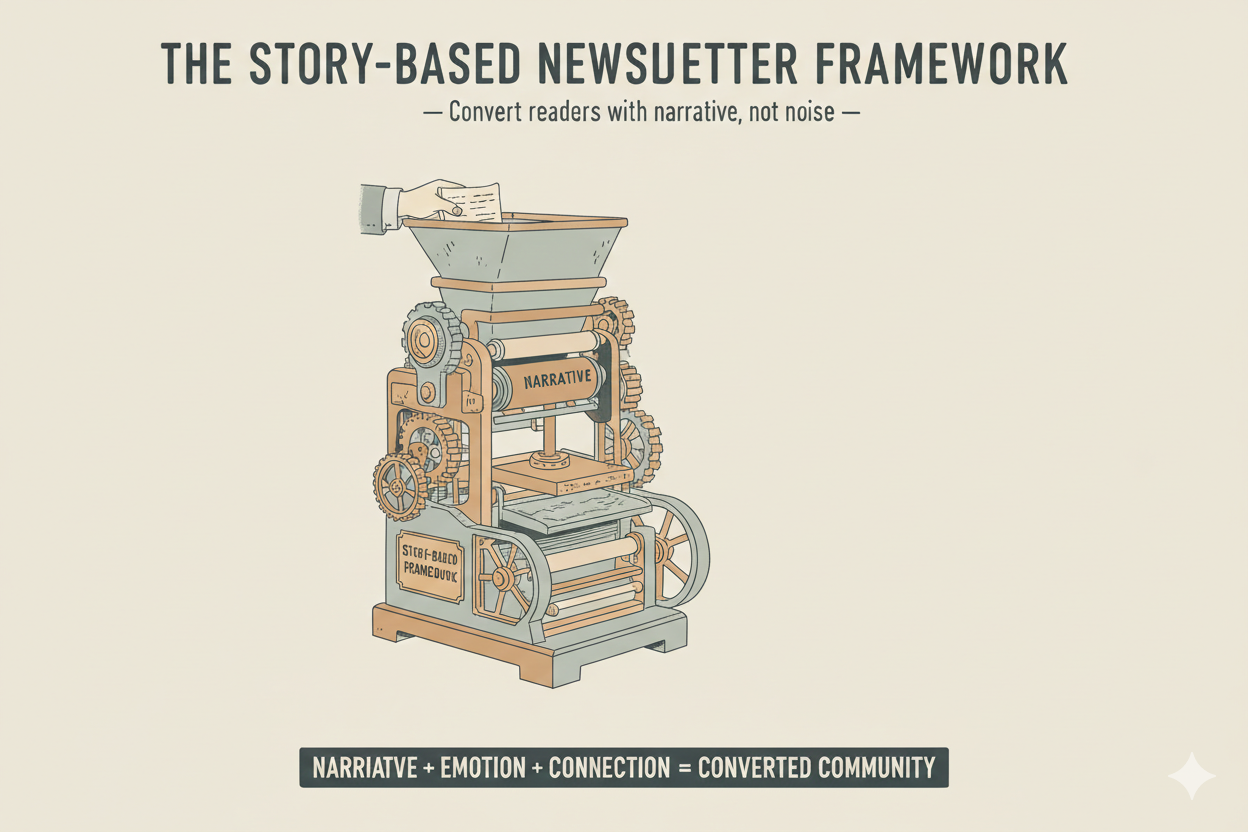
Inboxes are overflowing. Every day, readers face hundreds of emails competing for attention. Most newsletters get ignored because they add noise rather than meaning. The emails that break through aren't those with flashy gimmicks or endless tips. They are the ones that tell a story. They are human, relatable, and memorable. They convert because readers feel something.
At Inbox Alchemy, we've spent years helping founders, creators, and marketers move beyond generic email blasts. We've seen story-driven newsletters outperform traditional formats in engagement, retention, and action. Narrative transforms emails from background clutter into anticipated moments. The story-based newsletter framework we follow is designed to guide readers through emotion, insight, and action.
Why Stories Work Better Than Noise
Humans are hardwired for stories. Stories engage more than words. They activate emotion, memory, and sensory processing at once. When you tell a story, you don't just communicate facts. You transport readers into a scenario, letting them feel, imagine, and relate.
In contrast, purely informational emails only reach the rational mind. They are forgettable. They fail to create loyalty or action. Storytelling in newsletters achieves three things that noise never can.
First, it captures attention. A narrative opening instantly positions the reader in a scene they recognize or aspire to. Second, it builds emotional connection. Readers care because they see themselves in the scenario. Third, it drives action. Every story has a natural progression that leads to a takeaway readers can act on.
If you want readers to convert, engagement is not enough. They must care. And nothing creates care faster than story.
Understanding why newsletters are the only channel that compounds helps explain why investing in story-based frameworks pays long-term dividends.
The Anatomy of a Story-Based Newsletter
A story-based newsletter is intentional. It is structured to guide the reader from curiosity to insight to action. The framework consists of five key parts.
1. The Relatable Opening
The first sentence of your newsletter should feel like a mirror. It should reflect a moment your reader has experienced or fears experiencing. Specificity is crucial.
For example: "Last week, I spent three hours fixing a problem that could have been solved in ten minutes. Every wasted minute reminded me how often founders overcomplicate the simplest things."
This opening works because it is human, concrete, and sets up a problem that demands attention. It makes the reader think, This is about me.
2. Context and Stakes
Once attention is captured, explain why the story matters. What's at risk? What's the cost of inaction? The stakes create urgency and motivate readers to continue.
For example: "If every founder spent hours on avoidable errors, the opportunity cost alone could stall growth. That doesn't account for stress, burnout, or lost revenue."
This section positions the problem as significant and relatable. It keeps readers invested because the consequences feel real.
3. The Pivot or Discovery
Every story needs a turning point. In a newsletter, this is your insight or solution. It's the moment the story pivots from problem to revelation.
For example: "I realized the issue wasn't complexity, it was communication. A brief ten-minute sync with the team would have solved what took hours."
This is where narrative meets utility. The reader experiences the same insight you did, and your email becomes a guide, not just entertainment.
4. The Actionable Takeaway
A story without a lesson is just a story. The takeaway must be clear, practical, and immediately usable. Readers should leave thinking, I can apply this today.
For example: "Next time a small task stalls, step back. Ask questions, simplify the process, and clarify expectations. It saves time, reduces stress, and creates room for growth."
Actionable takeaways are the conversion engine. They move readers from passive consumption to practical implementation. This is the foundation of the high-converting newsletter format.
5. The Call to Engage
The final element encourages interaction. Engagement turns readers into participants, creating community and long-term loyalty.
For example: "What is the most time-consuming task you faced this week? Reply and share your story. I want to hear how you handled it."
CTAs should feel like a natural continuation of the story, not a commercial interruption. This approach deepens connection and fosters ongoing conversation. Learn more in our guide on how to write a newsletter that feels human.
Four-part structure that converts readers into buyers.
Start in the middle of a moment. 'Last Tuesday I almost killed my newsletter.' Readers cannot stop. They need to know what happened.
Give the reader enough background to understand the stakes. Keep it to 2-3 sentences. Do not over-explain.
What did this experience teach you? What would you do differently? This is where your editorial voice earns its keep.
The reader has followed you through a story. They trust you now. The ask feels earned, not forced. One link. One action.
Why This Framework Converts
Conversion is more than selling. It is about attention, trust, and repeated interaction. Story-based newsletters deliver all three.
Stories are memorable. Readers retain the lesson far longer than a bulleted list. Stories are relatable. Readers see themselves in your narrative and feel understood. Stories guide readers naturally. The arc of a story leads to action without feeling like a push. Stories create habit. Readers anticipate your next story, increasing open rates and loyalty over time.
From a business perspective, this translates directly to higher click-through rates, subscriber growth, and engaged communities. Narrative is the vehicle for both retention and conversion.
Understanding the critical newsletter metrics that actually matter helps you track whether your story-based approach is working.
Implementing the Framework
Storytelling is a skill that improves with practice. Here are practical ways to apply the framework:
Start small. Short, vivid stories are more effective than long-winded narratives.
Anchor each story to one lesson. Avoid diluting the takeaway with multiple unrelated tips.
Use real examples. Authenticity is more persuasive than abstract scenarios.
Combine personal and professional insights. Human stories paired with business lessons are the most engaging.
Test and iterate. Track open rates, clicks, and replies to see what resonates.
For founders just getting started, mastering the story framework is essential to building your first 1,000 subscribers.
Common Pitfalls to Avoid
Avoid these mistakes to keep your story-based newsletters effective:
Noise over narrative. Too many tips, links, or product plugs dilute the story.
Overly formal tone. Newsletters should feel like conversation, not corporate reports.
No takeaway. Readers enjoy stories but crave actionable insight.
Ignoring feedback. Reader replies and engagement metrics are gold for refining your approach.
The Founder's Newsletter Engagement Playbook covers additional strategies for avoiding these common mistakes.
Measuring Success
Story-based newsletters can be measured with standard email metrics.
Open rate measures whether your story-based subject lines capture attention.
Click-through rate shows whether readers follow the narrative to action.
Replies and engagement signal emotional resonance.
Subscriber growth reflects long-term loyalty built through narrative.
Each metric provides feedback for iterating stories, fine-tuning takeaways, and improving conversions over time. If your list has gone cold, learn how to revive a stalled newsletter with re-engagement tactics.
The inbox is a noisy place. Gimmicks, promotions, and transactional updates are forgettable. Story-based newsletters cut through because they resonate. They make readers feel seen, understood, and inspired.
Frequently Asked Questions
What is a story-based newsletter? A story-based newsletter is an email structured around narrative rather than just information or promotion. It uses relatable openings, stakes, insights, and takeaways to engage readers, build trust, and drive action.
Why are stories more effective than traditional newsletters? Stories activate emotion, memory, and imagination simultaneously. Unlike bullet-pointed or promotional emails, narratives make messages memorable, relatable, and actionable, which increases engagement and conversion.
How long should a story-based newsletter be? Brevity is more effective than length. Short, vivid stories that lead to a single insight work best. Most story-based newsletters perform well at 300 to 700 words, depending on the complexity of the lesson.
Can I use personal stories for business newsletters? Absolutely. Personal anecdotes make your messages human and relatable. When paired with actionable business insights, they create a balance between authenticity and utility that resonates with readers.
How often should I send a story-based newsletter? Frequency depends on your audience and resources. Weekly or bi-weekly sends are ideal for maintaining engagement without causing fatigue. Consistency matters more than volume.
How do I measure if my story-based newsletter is working? Track open rates, click-through rates, replies, and subscriber growth. Open rates show the effectiveness of your subject lines and story hook. Click-throughs and replies indicate engagement, while subscriber growth signals long-term retention and loyalty.
What's the simplest way to start implementing this framework? Start with one story per newsletter anchored around a single lesson. Use the five-part framework: relatable opening, stakes, pivot/discovery, actionable takeaway, and call-to-engage. Refine over time based on reader responses and engagement metrics.
At Inbox Alchemy, we believe narrative is the most reliable conversion tool a newsletter can offer. By structuring your emails around relatable openings, stakes, pivots, takeaways, and engagement, you create a rhythm readers anticipate and act upon.
Stories are not just entertainment. They are connection. They are trust. They are action.
Start telling stories in your newsletters today, and watch your engagement, loyalty, and conversions rise.
When you're ready to turn your newsletter into a business asset, learn how to turn your newsletter into a revenue engine.
Written by

Investor • Founder • Creator
Ryan Estes is co-founder of Kitcaster, an eight-figure bootstrapped podcast booking agency acquired by Moburst in 2025. He created AI for Founders, a podcast, newsletter, and workshop platform reaching 47,000+ entrepreneurs and CEOs. Based in Denver, Colorado.