The Weekly Newsletter Ritual, A Repeatable System for Predictable Growth
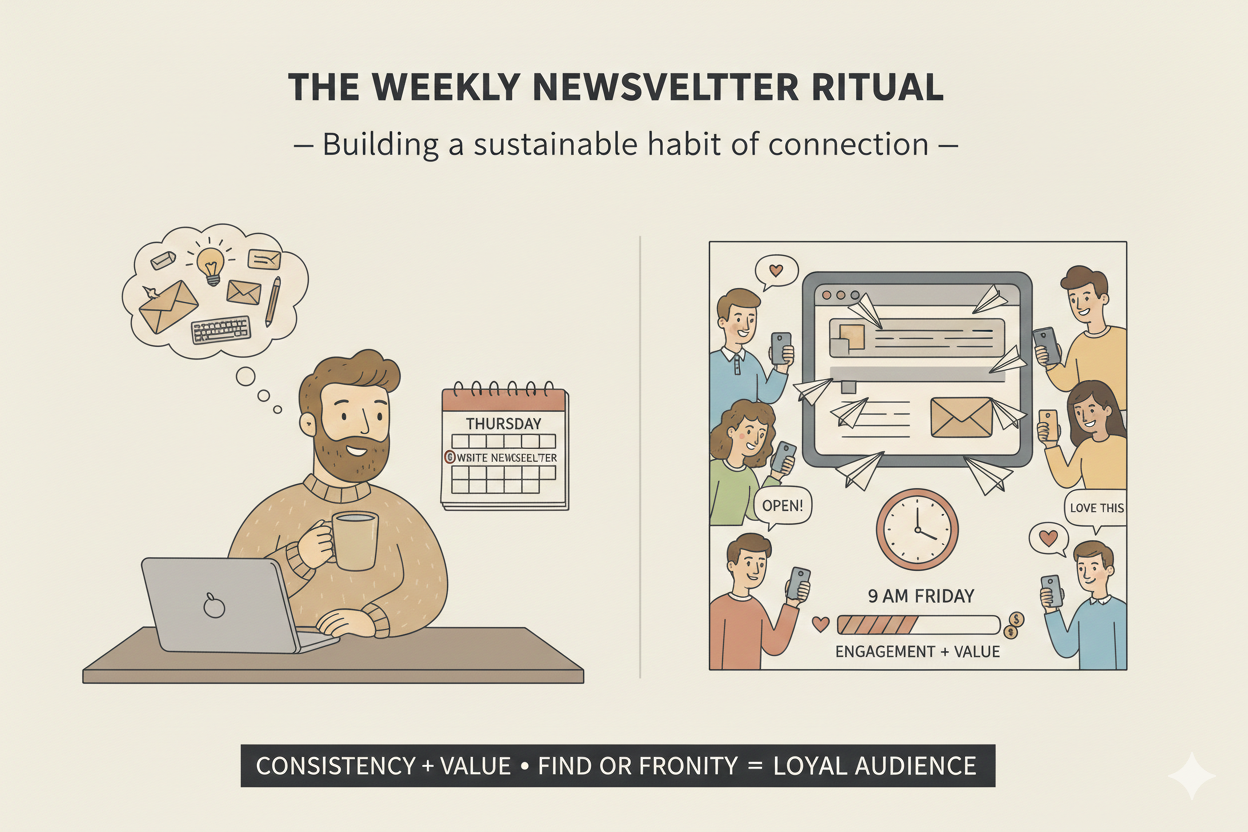
You want your newsletter to grow but showing up consistently feels impossible. Inspiration fades, deadlines creep, and every week you scramble to find something compelling to write. Growth doesn't happen by luck; it happens by design.
The solution isn't working harder. It's building a repeatable, founder-friendly ritual that makes newsletter creation predictable, reliable, and sustainable. When you systematize the process, you free your energy for strategy, creativity, and engagement while your audience grows without drama.
Here's how to structure a weekly newsletter ritual that founders can follow without burning out.
1. Start with a Planning Session
Before writing, map your week:
- Identify the focus of the newsletter: topic, lesson, or update.
- Reference your content calendar or content bank for ideas.
- Sketch the outline in bullet points: headline, subhead, main sections, CTA.
Planning transforms scattered thoughts into a clear path, reducing the dreaded "blank page" paralysis.
2. Allocate Dedicated Creation Time
Set aside focused blocks for writing:
- 60–90 minutes is usually enough to draft a full newsletter.
- Remove distractions: notifications off, inbox closed.
- Treat this block as sacred, founders need protected headspace.
Consistency in timing builds rhythm. Your brain begins to anticipate creativity at that hour.
Five blocks that eliminate the blank page forever.
Spend 15 minutes writing down every idea, question, or observation from the week. No filtering. A note app, a voice memo, whatever sticks.
Pick one idea. Write the three key points you want to make. Identify the story you will open with. The outline is the hardest part done.
Write the full draft in one sitting with no editing. Bad drafts that exist beat perfect drafts that do not. You can always edit.
Read it aloud. Cut anything that slows the pace. Add the CTA. Set up in your ESP and schedule it for your optimal send time.
Read every reply. Note which topics got the most engagement. This becomes next week's idea list. The loop closes itself.
3. Use a Template for Predictability
Templates reduce decision fatigue:
- Standard structure: Hook → Value → Proof → CTA
- Repeatable formatting keeps newsletters scannable and familiar
- Adapt headlines and hooks, but keep the backbone consistent
A strong template ensures quality while allowing speed and flexibility. Learn more about high-converting newsletter formats that drive results.
4. Integrate Research Efficiently
Readers expect insight. Collect it systematically:
- Use your weekly reading, podcasts, or calls as raw material
- Capture quotes, stats, or anecdotes in a running document
- Pull only the most relevant points into each issue
The goal is curated value, not exhaustive coverage.
5. Include One Anchor Piece of Value
Every newsletter should deliver at least one unmistakable takeaway:
- A framework, a lesson learned, or actionable tip
- Something the reader can implement immediately
- Anchor your issue around this insight and build context around it
Readers remember what they can use. This creates loyalty over time. The story-based newsletter framework can help you structure these anchor insights effectively.
6. Proof, Polish, and Schedule
Before hitting send:
- Check grammar, readability, and flow
- Add any supporting visuals or links sparingly
- Schedule for a consistent day and time
Predictability in publishing strengthens audience habits. They start expecting you and open because they trust your rhythm. Understanding the best send times can further optimize your scheduling.
7. Reflect and Iterate
After each send:
- Review performance metrics (opens, clicks, replies)
- Note what resonated and what didn't
- Adjust the next week's focus, tone, or structure
Small, deliberate iterations compound. Predictable growth comes from repeated, informed cycles. Make sure you're tracking the metrics that actually matter and not falling into the measurement trap.
The weekly newsletter ritual isn't a creative cage, it's a launching pad. By systematizing planning, drafting, and sending, you create a pipeline of value for your readers without draining your energy. Founders who adopt this ritual don't just maintain consistency, they grow their audience predictably and sustainably.
At Inbox Alchemy, we help founders design newsletter systems that amplify voice, retain attention, and deliver results week after week. The magic isn't in inspiration, it's in ritual, repetition, and reflection.
Ready to build your own sustainable newsletter system? Book a free consultation to get started.
Frequently Asked Questions
How much time should I spend on each newsletter? 60–90 minutes for drafting is ideal. Planning, research, and reflection add extra, but keep it focused.
Do I need to follow the same structure every week? Yes, templates reduce friction and build reader familiarity, though small variations keep it engaging.
How do I know what "one anchor piece" to include? Pick the insight or lesson that provides the most immediate value to your audience.
Should I schedule newsletters at the same time every week? Absolutely. Predictable timing trains your readers to expect your content.
How often should I iterate on the ritual? Weekly reflection is key. Adjust small things, measure impact, and iterate continuously.
Written by

Investor • Founder • Creator
Ryan Estes is co-founder of Kitcaster, an eight-figure bootstrapped podcast booking agency acquired by Moburst in 2025. He created AI for Founders, a podcast, newsletter, and workshop platform reaching 47,000+ entrepreneurs and CEOs. Based in Denver, Colorado.