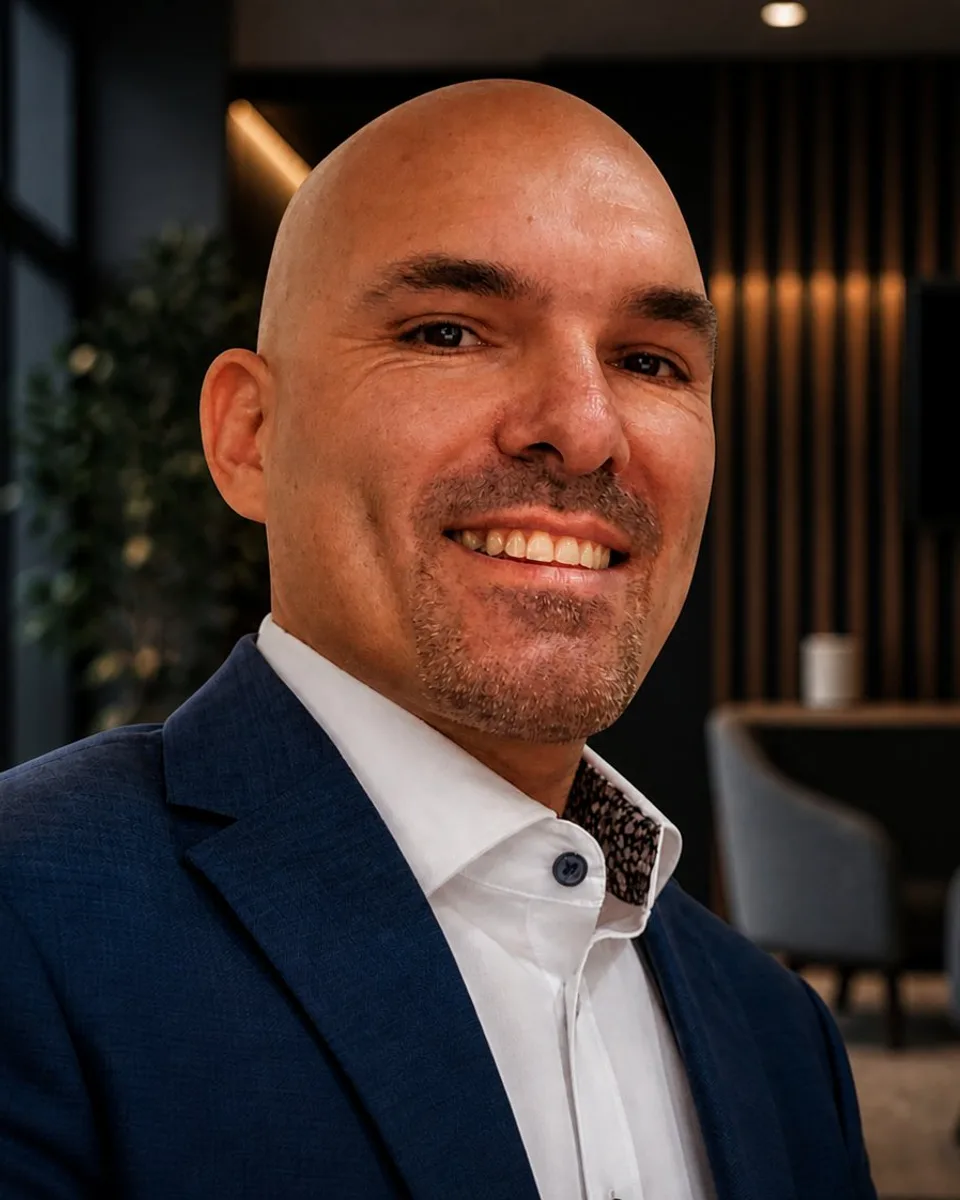
Domenic Suppa / The Rose Hill Review:
How a Life Sciences Operator Became the Trusted Signal in a Field Full of Noise
The co-founder and COO of Rose Hill Life Sciences launched a brief on the science, regulation, and human story of psychedelic medicine. In three months it grew from 2,645 readers on the first send to 9,871 on the tenth, and the audience did not just open it. They acted on it.
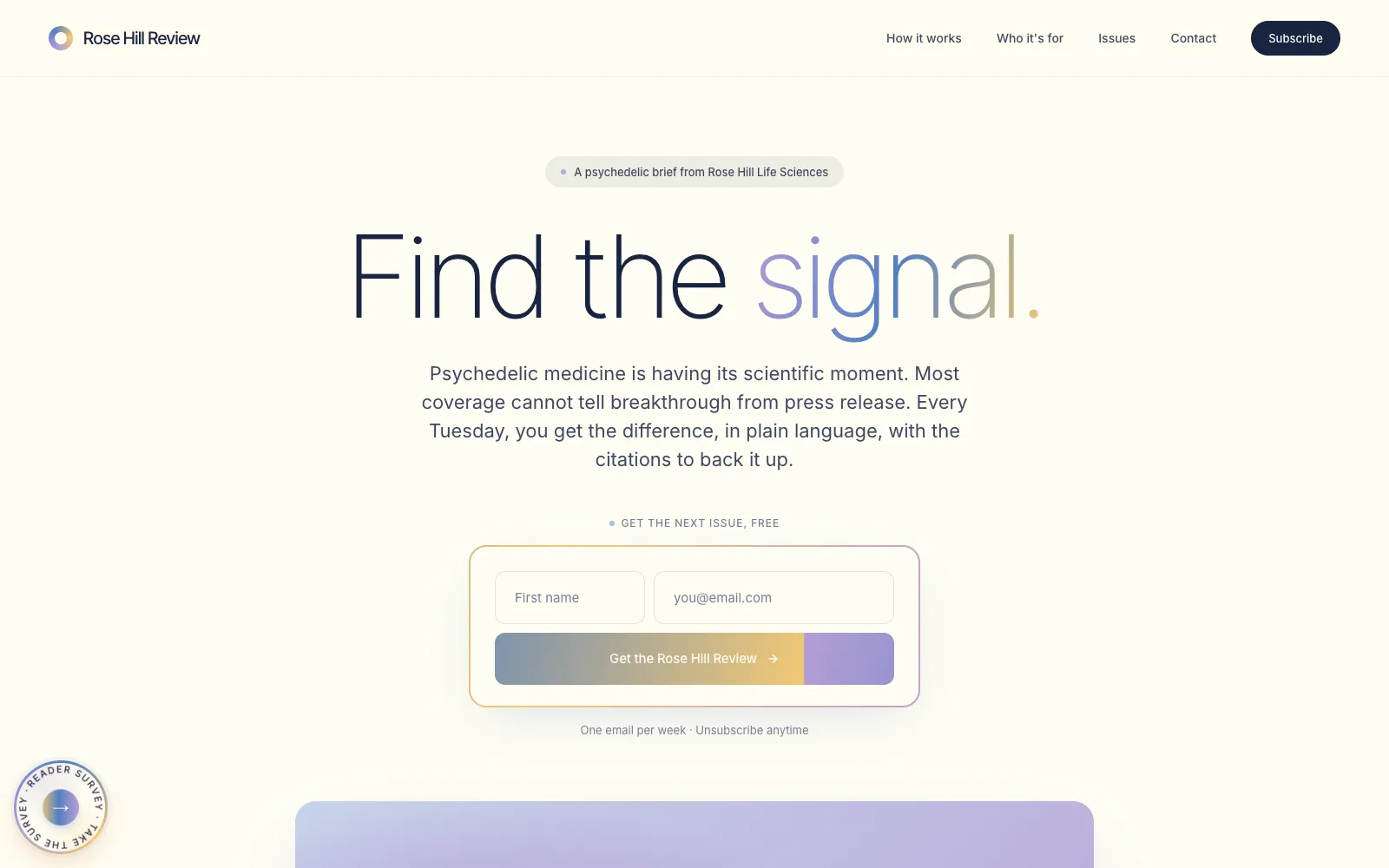
Find the signal.
Own the trust.
Psychedelic medicine is having its scientific moment, and most coverage cannot tell a breakthrough from a press release. The goal for The Rose Hill Review was to become the publication readers trust when the next headline drops, and to put Rose Hill Life Sciences at the center of that trust.
- Separate signal from noise: cross-check press releases against trial data and name hype as hype
- Serve four audiences at once: patients, investors, clinicians, and the curious public, in a single read
- Build primary-source authority: peer-reviewed papers, FDA filings, trial registries, and conversations with researchers, cited every time
- Grow fast without diluting the list: scale the audience while keeping readers engaged issue after issue
Not the loudest voice in the field.
The one readers trust.
Domenic Suppa brings 11+ years as a senior executive in operationally complex, highly regulated industries, including serving as COO of a Denver cannabis company from 2013 through its acquisition. The Rose Hill Review turns that operator credibility into a publication: published by Rose Hill Life Sciences, edited by Domenic, and built for readers who cannot afford to be misinformed.
Evidence First
Every claim is sourced to a paper, filing, or trial registry, with numbered footnotes in every issue. Credibility is shown on the page, not asserted.
Hype Named as Hype
Press releases get checked against the underlying data. In a category crowded with promotion, the willingness to say what is not proven is the differentiator.
Operator Lens
Science, regulation, and capital read side by side. A trial result, an FDA designation, and a billion-dollar acquisition are covered as one connected story.
Expert Bench
Bylines from Rose Hill leadership and outside contributors, including a neurologist and PhD clinicians and drug developers, give the brief depth no single author could.
Readable in five minutes.
Useful for the rest of the week.
Every issue follows the same arc: observation, evidence, takeaway. The Dispatch sets up the week's news, The Science unpacks the mechanism, The Story puts a human face on it, and You Asked answers a real reader question. 500 to 1,000 words, written so a curious patient and a working researcher both leave with something useful.
“A compound with no perceptual effect just became a nine-figure bet. Read into that.”Subtitle, issue #010
The five most-opened issues
Open rate by issue
Audience growth, issue by issue
10 issues, Jun 25 to Sep 25
3.7x the audience
in three months.
Issue #001 went out on June 25 to 2,645 readers and opened at 47.6%. By September 25, the tenth send reached 9,871 readers, and September alone added a new record audience every single week. Growth that fast usually costs engagement. Here, the largest send was also the best performer: a 33.5% open rate and the most clicks of any issue.
- 2,645 to 9,871 recipients across ten sends, June 25 to September 25
- 14,156 total clicks from readers acting on the content
- Record issue: 2,582 clicks and a 26.16% click rate on the largest send yet
Four kinds of readers.
One standard of evidence.
The psychedelic medicine space moves fast and gets reported badly. The Rose Hill Review exists for the readers who cannot afford either problem, and it was designed from day one to serve all four of them in the same issue.
Clicks, every issue
Unique clicks per send
Investors and operators
LPs, family offices, VCs, and operators separating credible early-stage opportunities from PR-driven promotion. The brief names names, cites sources, and flags what is actually moving.
Researchers and clinicians
Neuroscientists, psychiatrists, and trial coordinators who want consolidated weekly updates on protocols, outcomes, and regulatory shifts, drawn from primary sources.
Patients and advocates
People exploring options for treatment-resistant depression, PTSD, and other conditions, plus the people supporting them, looking for clarity on what is available and what is still hype.
The curious public
Health journalists, policy thinkers, and the genuinely curious. Accessible explainers grounded in primary research, with no woo and no moral panic.
The market stories pulled hardest.
The audience followed the money.
The data showed exactly what this audience values. The three best click counts of the run came in back-to-back September issues, led by the deal and market-structure stories. That is the signal a life sciences company wants: an engaged, investor-minded readership that reads Rose Hill's analysis of where capital is moving, and clicks through to go deeper.
2,582 clicks on “Three acquisitions, three different drugs, one shared bet,” an analysis of $6.2B in combined potential deal value across three pharma acquisitions
2,186 clicks on “The room you’re in changes what psilocybin does to your brain,” a 62-brain imaging study broken down for a non-specialist reader
2,022 clicks on “$3.8B. The largest deal this field has seen,” the first of three straight issues to set a new click record
The stories that pulled hardest
Unique clicks by issue
The brief by the numbers
From veteran remission data
to billion-dollar deals.
Ten issues in, The Rose Hill Review has covered the full arc of a field in motion: the clinical evidence, the regulatory path to coverage, the legal landscape, and the capital now flowing in. Each issue takes a clear position on what the evidence actually establishes, which is exactly what makes Rose Hill the name readers associate with getting it right.
- Clinical evidence: “9 of 12 veterans reach remission from PTSD in new trial” and “Two Phase 3 wins. What the evidence now establishes.”
- Regulation and access: “How far is psilocybin from becoming a covered treatment?” and “Two legal paths to psilocybin, different speeds”
- Mechanism: “One dose, one month of new brain connections.” decoded for clinicians and patients alike
- You Asked: real reader questions, like how to explain Oregon access versus VA care to a patient, answered in every issue
In a field full of noise, the scarcest asset
is the publication people trust.
Domenic did not set out to be the loudest voice in psychedelic medicine. He set out to be the most reliable one: primary sources, cited every time, hype named as hype. Ten issues later, nearly 10,000 investors, clinicians, patients, and curious readers receive that brief, and they open it, read it, and click through at a rate that shows they are treating it as a working resource. For a life sciences company, that trust is not a side effect of the newsletter. It is the whole point.
Read The Rose Hill Review